
Saturday, December 20, 2014
Themes
Just went to see Birdman with my relatives. It's based on Raymond Carver's What We Talk About When We Talk About Love, a short story about trying to make your relatives understand the themes of the movie Birdman on the drive home from the theater.

Wednesday, November 26, 2014
Ill-Advised Nuclear Testing, Part 3
Well, just make bigger nukes, obviously.
Enter, the H-bomb. The hydrogen or thermonuclear bomb is a much fancier lad than the a-bomb that preceded it. The A-bomb is purely a fission device, in which heavy elements are split, releasing colossal amounts of energy. But you can also fuse lighter elements to release energy. The problem is, it’s hard to compress and heat lighter elements enough to ignite fusion. Re-enter the A-bomb, which can provide more than enough heat and compression to ignite a fusion reaction. And then re-enter the A-bomb again, because we’re going to surround the fusion stage of the weapon with a massive amount of unenriched uranium, called the tamper. Unenriched uranium is stable under normal conditions, which is why we can cram so much of it into our thermonuclear device in the first place. But when exposed to the fusion reaction, unenriched uranium completely loses its shit. It kicks off a second round of fission, which in most thermonuclear devices provides the majority of the megaton-range yield.

It’s also much dirtier. While only increasing the yield by three- or four-fold, it multiplies the radioactive byproducts of the bomb by a thousand times. Behind closed doors, the military fucking loved that part, because a single bomb could effectively bring strategic targets to ruin even if strategic assets within those targets survived the initial blast and fireball. Oh and, by strategic targets, I mean cities, factories, and ports. And by strategic assets, I mean the people who live and work in them.
In public, the tone was very different. The official line in the U.S. was that radiation release did not scale with the increasing yield of nuclear weapons. Which, I guess, is technically true. It didn’t scale, because in the H-bomb, radiation growth exceeded yield by several orders of magnitude.
Which brings us back to Bikini Atoll, where we started this wild and wonderful journey. It was early 1954, about a year and a half after the first ever detonation of a thermonuclear device in the Ivy Mike test. The problem with the Ivy Mike H-bomb, however, was that it was literally the size of a building and thus completely impractical for military use. The Castle Bravo test sought to rectify that by detonating a thermonuclear bomb weighing about ten tons. That’s still pretty heavy, but it’s getting into the deliverable range.
The Castle Bravo bomb was expected to yield a blast in the 4 to 8 megaton range, but the designers made a critical error. They assumed that most of the mixture of fusion fuel in the second stage would prove functionally inert, unable to contribute to the nuclear reaction within the millisecond timeframe of the detonation sequence. This was due to the fact that they had never actually tested the fuel's response to high-energy particles, like those released by the first stage. If someone had stopped and said, “You know, maybe instead of assuming the mix will work a particular way, we should put it in a nuclear accelerator and actually test that shit,” then things might have gone differently.
But who has time for that? We’ve got stuff to nuke. Snap to it!
That very same “fuck it, let’s just light it off and see what happens” attitude was also operative on the day of the test, when it was decided they would go ahead with the detonation despite prevailing winds that were veering from north to east, where they could carry fallout over populated islands. The deciding factor, apparently, was that they’d done a lot of work setting up observation instruments around the blast site, and would have to do it all over again if the test was delayed.
Who needs that kind of hassle? Just blow the damn nuke already.
Which they did. And it was a fucking disaster.

Or a stunning success, depending on your perspective. Like, if you were an insane person, as seemed to be the case for many of our military and civilian leaders at the time, you’d call it a big win, because the yield was a full fifteen megatons. At the time, that made it the largest nuclear detonation in history, leaving a crater over a mile wide and 250 feet deep. The fireball was four miles wide and the resultant mushroom cloud seven miles wide. America, fuck yeah.
Even better, it spread a cloud of radiation over five thousand square miles of ocean. I mean, you can neutralize a lot hell of a lot of strategic assets that way.

The test was so successful that indigenous strategic assets had to be evacuated from islands which were rendered uninhabitable by fallout. Five strategic assets on the Japanese fishing boat Daigo Fukuryu Maru were exposed, resulting in the death of one of those strategic assets. Radioactive contamination from the test was carried by wind and ocean currents all around the Pacific Rim, from the west coast of America to Japan and Australia.
So, it was a rousing success, unless you happen to be afflicted by sanity.
Speaking of sanity and the lack thereof, you know what nuclear weapons would be great for? The construction business.

From that nugget of an idea came 1961’s Operation Plowshare, a proof-of-concept plan to demonstrate the myriad peaceful applications of multi-kiloton nuclear devices. The goal of Plowshare was to develop a toolbox of nuclear earth moving techniques—whose concepts ranged from merely frightening to utter, batshit insanity—and then hand them over to the private sector. Because, really, what damage can the private sector possibly do with nukes that the government hasn’t already?
Techniques developed by Plowshare were to be used to excavate rock and to fracture fossil fuel deposits for collection of their now-radioactive natural gas. If that sounds familiar, it’s basically just frakking, except instead of fracturing the rock with water, you use a nuclear warhead. What could be less controversial?

Similar methods were proposed for leached copper recovery and steam generation. And hey, wouldn’t nuclear devices make strip mining that much more wonderful?
If you’re already floored by this nuclear hubris, you may want to take a moment, because it gets worse from there. A Plowshare subproject codenamed Carryall planned to use twenty-two nuclear bombs to cut through the Bristol Mountains in California. Then a highway and rail line could be constructed across them. Complete, I imagine, with signs instructing motorists to please keep their windows rolled up.

And if you did happen to ride the crazy train through Carryall mountain pass, the next stop would be a nuclear-blasted sea-level link connecting the Atlantic and Pacific Oceans, to be called the “Pan-Atomic Canal.”

Once those ships transit Central America, though, they’ll need a harbor to dock at. And won’t it be easier to find that harbor if it glows in the dark? Enter project Chariot, which would chain several nuclear bombs to blow open an artificial harbor.

Now that you’ve docked your cargo ship, though, you have to get your goods out to the people. You’d like to use a river barge, but the only river nearby doesn’t connect to the river you need to send your product up. Well shit, man, with nuclear bombs we can make rivers into whatever shape we want. Project Tombigee/Tennessee River would have done just that, combining the aforementioned little rivers into one big river.

But, you ask, what if blowing up all those rivers creates a water shortage? Well, my friend, nuclear bombs have you covered there, too. Plowshare proposed to use nuclear bombs to connect two aquifers for easier water access. In another proposal, Plowshare would create a rubble chimney above porous rock, which would allow rainwater to seep through the rubble and collect in an artificial aquifer. Think of it as a value-add proposition, because your drinking water would be suffused with expensive radioisotopes.

Thankfully, someone finally came to their sense and cancelled the program in 1977, before it could do any major harm. But for the decade and a half in between, someone thought all of this was a good idea.
If I may come back to the present day for a moment before I wrap this up, I’m reminded of a bit of common wisdom that’s become popular over the last decade: "we have to keep nuclear weapons out of the wrong hands." On its face, the statement is indisputable, more a truism than a proposition, but something about it has always bothered me. It wasn’t until I was doing research for this series of articles that I finally realized what it was.
The problem is that it rests upon an unfounded, unspoken premise: that there’s such a thing as the right hands.
I leave you now with a song.
Monday, November 24, 2014
Reminder...
The final (for now) installment of Ill-Advised Nuclear Testing will be going up on Wednesday as normal, but after that it'll be light blogging for the foreseeable future.
So make sure you hold that article close and read the shit out of it.
So make sure you hold that article close and read the shit out of it.
Wednesday, November 5, 2014
Ill-Advised Nuclear Testing, Part 2

Last time in this series, we talked about Operation
The answer to that question would have to wait nearly a decade, until memory of Operation Crossroads had faded. And then, finally, the dream of a deep-water nuclear test would be revived in Operation Wigwam. Why Wigwam? Because the atomic bomb was invented too late to contribute to the genocide of Native Americans, but we can still nuke them in spirit.
So in May of 1955, a Mark 90 nuclear device was taken five hundred miles off the coast of San Diego and suspended by cable from a barge. Video from the test can be found here.
5/6th scale model submarines—codenamed “Squaws,” because let’s really rub it in, guys—were deployed to gauge the effect of an underwater detonation on enemy subs. The detonation went largely unnoticed, though it was picked up on seismological instruments across the Pacific and a cargo ship leaving San Francisco radioed in to ask if there’d been an earthquake.

The test was better planned than Crossroads and the personnel better prepared, but they still didn’t exactly have their shit together. One of the observation ships lost power due to damage from the blast, remaining within the danger zone for longer than the test plan called for, and the crew apparently had to shelter in the center of the ship during the four hours it took to make repairs.
The Navy cheerfully reported no dead marine animals observed after the test. This claim was made in the same report in which they claimed 100% of radioactive materials were contained to the ocean, which makes me think they just weren’t looking very hard. In the months following the test, a radioactive fish was detected during spot checks at a cannery on the West Coast, but the Navy blamed it on contamination from a test the previous year—as if that made it better. There was no word, naturally, on how many radioactive fish entered the food supply because they hadn't been spot-checked.

Flush with the afterglow of blowing up the ocean with a nuclear device, the Department of Defense started to wonder what it would be like to blow up the upper atmosphere. And in the spring and summer of 1958, they did exactly that as part of Operation Hardtack.
The high altitude portion of Hardtack, codenamed Newsreel for obvious reasons, was a disaster even on its own terms. In its first high altitude test, codenamed Yucca, a bomb was suspended from a balloon fifteen miles above the surface. The bomb detonated as planned, but the desired data was not acquired because the scientific instruments suspended below it were not turned on at the time of detonation. Well shit man, what do you expect, perfection?
The next test, codenamed Teak, was sent up by rocket and intended to detonate over the Pacific, off the coast of Johnston Island at an altitude of 250,000 feet. Unfortunately, someone must have misplaced a decimal point or confused imperial for metric, because this is what actually happened:
Yeah, you guys might want to put some aloe on that. But hey, third time’s the charm, right? So testing continued according to schedule and the Orange test was conducted at an altitude intermediate to the first two tests. It went better than the first two, but it could only have gone worse if someone accidentally left the warhead under their desk.
In the end, however, I’m sure that plenty of valuable data was gathered from these experiments, as shown by whatever the fuck is going on in this documentary picture of an actual Operation Newsreel researcher:

No, seriously. What the fuck is going on here?
But you know what the upside of fucking up your high altitude nuclear tests is? You get to do them over and blow up even more nukes in the upper atmosphere! For that matter, why stop at the upper atmosphere when it’s finally within our ability to nuke outer space?
This was the genesis of 1962’s Operation Fishbowl.
It is the policy of the United States that activities in space should be devoted to peaceful purposes for the benefit of all mankind.Nah, screw that noise, let’s slip the surly bonds of Earth and fuck some shit up. This time there would be none of the screw-ups from Newsreel. This time, we’d dot our i's and cross our t’s, making sure every single facet of the testing was well understood and every contingency planned for.
-U.S. National Aeronautics and Space Act of 1958
Shit, nevermind. We just dropped a nuke into the ocean. My bad. Turns out we really weren’t rocket scientists, after all.
The first planned test, codenamed Bluegill, aborted when they just kinda lost track of the test rocket after launch. With no ability to tell which way the thing was going, the rocket was destroyed remotely, preventing a nuclear detonation but raining bits of its nuclear core over a wide area of the Pacific Ocean.
The second planned test, codenamed Starfish, was not quite as successful as Bluegill, which is saying a lot. Starfish’s rocket motor stopped working at about 30,000 feet and also had to be destroyed remotely. Again, raw uranium and plutonium debris from a thermonuclear device rained down into the Pacific Ocean. Some of this contamination fell on Johnston Island. And yes, that's the same Johnston Island above which a nuke was accidentally detonated during Operation Newsreel.
After that, Operation Fishbowl was given some time to dry out and get its shit together. Three weeks later, it was back with a third test called Starfish Prime. Defying all the odds, Starfish Prime actually worked, detonating a 1.4 megaton warhead at an altitude of 250 miles.

Starfish explosion as seen from Honolulu
Starfish Prime exceeded all expectation, in the sense that it caused more property damage than any of the operational planners had dared to hope for. The ionizing radiation generated by the blast stripped electrons from atoms in the upper atmosphere and sent them screaming down through the Earth’s magnetic field at a significant fraction of the speed of light. This interaction in turn created an electromagnetic pulse over the central Pacific. The pulse damaged the electrical grid in Hawaii and cut the telephone link to and from Kauai.
Worse still, many of those electrons were deflected along Earth's magnetic field lines and created an artificial radiation belt that wrapped around the globe for five years before finally dissipating. The belt destroyed seven satellites, at a time when there weren’t a whole lot satellites in orbit. Among its victims was the just-launched Telstar 1, the world’s first commercial telecommunications satellite.
And if all this talk of electrons reminds you of an aurora, then you’re probably smart enough to conduct a high altitude nuclear trial, at least by the standards of the 1960’s. Possibly too smart, as some sources claim the artificial aurora resulting from Starfish Prime took the researchers by surprise.

Starfish aurora seen from Maui.
The aurora stretched two thousand miles, spanning the equator and illuminating a third of the Pacific. The most intense aurora effects lasted only a few minutes, but some of them persisted for days, and were bright enough for the New Zealand Air Force to conduct anti-submarine exercises by.
With seven satellite kills in the pipeline and a man-made light show unlike any seen before, Operation Fishbowl was finally back on track. So naturally, they blew up their next rocket on the launch pad after an engine malfunction and sprayed yet more radioactive plutonium across Johnston Island.
That test was going to be Bluegill Prime, and the next one in line was Bluegill Double Prime. Why Bluegill Double Prime? Because you try coming up with enough new names to stay ahead of all our catastrophic launch failures.
Bluegill Double Prime blew up too. It started tumbling shortly after launch and had to be destroyed, showering debris from its nuclear core onto—everybody say it together now—Johnston Island.
Pro tip: do not ever vacation on Johnston Island.
Fourth time’s the charm, though, right? And finally, on Bluegill Triple Prime, the rocket launched and the bomb detonated without a hitch.
I’m sure they got lots of fantastic pictures of angry men staring at rabbits, so it was all worth it.
Wednesday, October 22, 2014
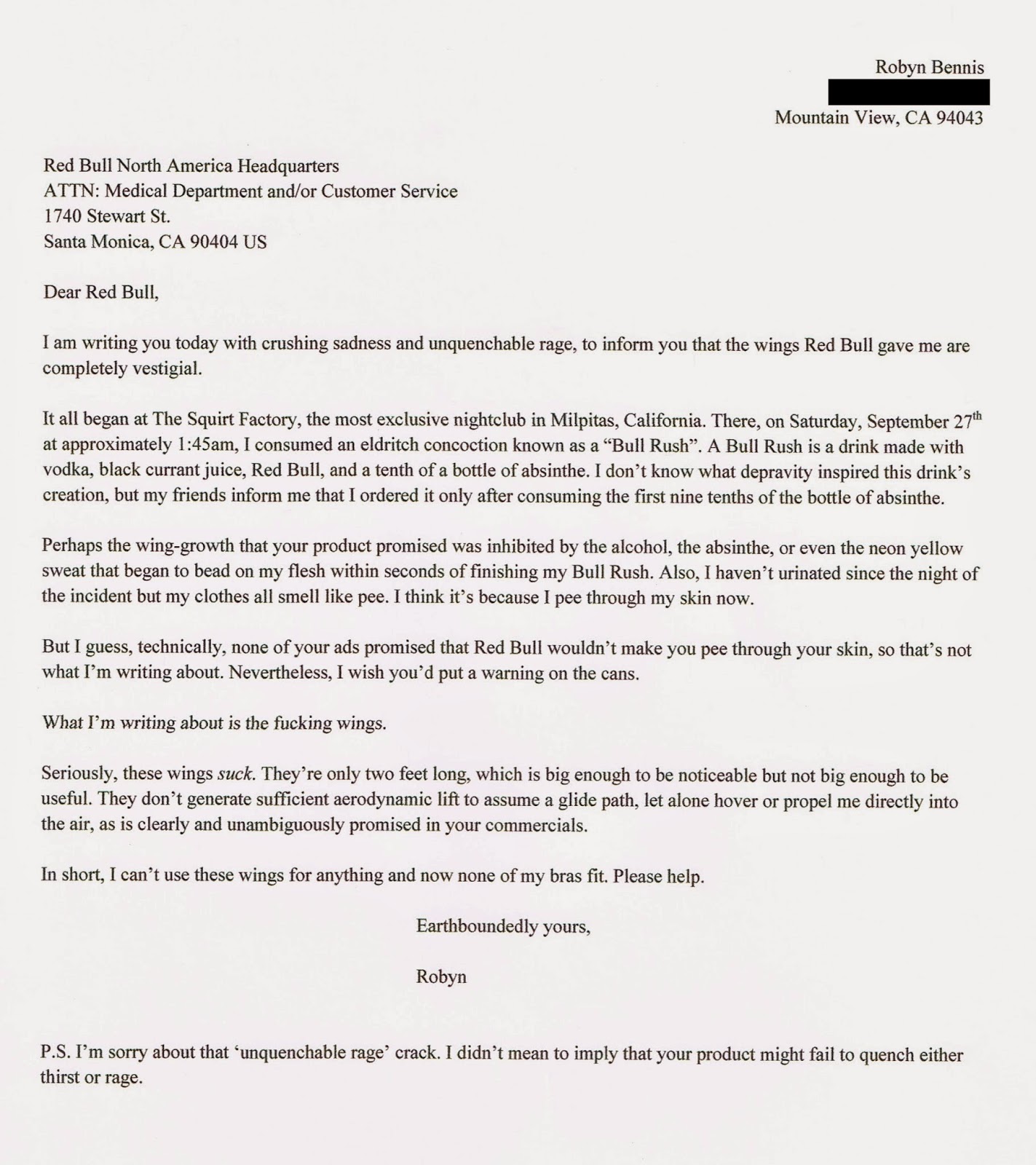
Letters Home
Someone please stop me.

Wednesday, October 15, 2014
Ill-Advised Nuclear Testing, Part 1

Nuclear bombs: they’re pretty safe, right? Just make sure you’re standing behind the yellow line when they go off and you should be fine. Who drew the yellow line? Umm... some guy, I think. He had a clipboard and everything, so he must know what he’s doing.
It’s hard to do an article on the most ill-advised nuclear tests of all time, because it’s such a competitive area. You’d like to think that any nuclear testing would occur only after the most careful study and extensive cost-benefit analysis. In reality, however, most nuclear test programs seem to have their genesis with someone saying, “Hey, you know what look cool?”
The tradition of poorly thought out nuclear testing goes back almost to the beginning, in fact, when competing superiority and inferiority complexes in top military brass collided to make Operation Crossroads, also known as the Able-Baker tests. It all began in August 1945, the same month that atomic bombs were dropped on Hiroshima and Nagasaki, when the Navy and a United States Senator independently proposed that we drop a few nukes on warships.
The Navy wanted to do it so they could prove they still had relevance in the nuclear age. The Army Air Force, by way of their pet Senator, wanted to do it to prove the Navy’s irrelevance in the nuclear age. Both proposals were more or less rigged to produce the desired results. The Air Force wanted to pack as many ships in as tight as possible with full loads of fuel and ammunition to assure maximum destruction, while the Navy wanted unarmed, unfueled ships spread over a wide area to show how survivable they were.
To understand these political machinations, you have to understand that the Air Force brass, drunk with power after killing something like a million civilians with nuclear and conventional weapons during WWII, were of the opinion that, eh, America didn’t really need a navy anymore. The Air Force’s shiny new nuclear weapons could do anything the Navy could, and better! Shit, I bet if you put floaties on a nuclear bomb, it could have landed troops at Normandy at least as well as the stupid Navy did.
The competing plans eventually compromised, crowding the ships into a small area but loading them with only small amounts of fuel and ammunition. Scientists who’d worked on the Manhattan project, apparently oblivious to the critical need for the Air Force and the Navy to get into a dick-measuring contest, warned that the entire project was as dangerous as it was pointless. They were, of course, ignored. What the hell did they know about nuclear weapons, anyway?

Amateurs.
The preparations for the test were abysmal. Simulations were conducted using a stick of dynamite and model ships. Many of the test ships being moored at Bikini Atoll had unrepaired damage from the war, which would complicate any later damage analysis. And no pretesting of the effectiveness of planned decontamination techniques was made, so they really had no idea whether they’d be able to decontaminate surviving ships. The man in charge of the tests, Vice Admiral William Blandy, apparently didn’t even realize that ships might survive an atomic blast but still receive a fatal dose of radiation. When someone brought this up, he hastily added test animals to the target vessels. He also didn’t know that the Geiger counters used on site could not detect alpha radiation, and were therefore blind to plutonium contamination.
In short, the whole operation was fucked from the start.

Rare color photo of Admiral Blandy observing the Able-Baker tests.
Nevertheless, in June of 1946 the first bomb was readied for air drop aboard an Air Force B-29. It was armed with the infamous “demon core,” which had already taken the lives of two scientists in separate accidents during the Manhattan Project. In one last act of defiance, no doubt, the bomb missed its target by half a mile and landed well to the edge of the cluster of test ships, sinking only five of them.
Score one for the Navy.
You can find color footage of the Able test here.
Within a day of dropping the bomb, most of the surviving target ships had been boarded for inspection and decontamination. So, yeah, let’s take that point right back. However, in what I’m just going to assume was sheer luck, given the competence level of the people in charge, the Able bomb was air-burst high enough to avoid significant fallout. Most of its fission products dispersed into the atmosphere, where you’re still breathing them today.
News reporters brought in to witness the blast expressed disappointment that the bomb didn’t sink more ships, which just goes to show how quickly human beings get bored with even the most incredible events. This was only a year after the first detonation of an atomic weapon, and the A-bomb was already blasé.

Meh.
For the Baker test, a nuclear bomb was suspended by cable from the ocean surface, so that it could detonate underneath the surviving target ships. This was a monumentally poor idea, because no one had a clue how this would affect the blast dynamics. Here’s a little preview, though: it wasn’t for the better.
When Baker went off, it lifted millions of tons of irradiated water and seabed material up to a mile in the air. When it inevitably came back down, this radioactive material expanded into a turbulent cloud of mist which spread outward, engulfing all of the test ships and bathing them in radioactivity. Since Baker was detonated below the surface, nearly all of the fission products and unfissioned plutonium settled into the local environment.

Baker Test. The shadow at the base of the water column is thought to be the battleship Arkansas
being upended by the blast.
5000 people were sent into that radioactive environment to perform evaluation and decontamination. Fireboats tried to scour contamination off target ships with their hoses, but the process was largely ineffective—partly because they were trying to decontaminate with water pumped from the lagoon, which was now also radioactive. In many cases, this process only created more problems, when radioactive spray from the hoses blew back onto the fireboats and contaminated them too.
Video of the detonation and some of the fireboat cleanup efforts can be found here.
And if you think that’s dumb, you haven’t heard nothing yet, because sailors were actually sent aboard test ships to decontaminate them by hand. With soap and water. These sailors were given no protective equipment. They went to work in their uniforms, scrubbed plutonium-contaminated decks on their hands and knees, and then returned to their ships—dragging the contamination with them to spread it there.

Cleanliness is next to glowiness.
Even worse, the Navy was under the impression that target ships moored at the very edge of the test site could be recrewed and sailed home before being scrapped. Why in the holy hell would anyone want to occupy a ship that’s had an a-bomb dropped on it, and that’s just going to be scrapped anyway? Well, remember that dick-swinging contest between the Air Force and the Navy? The Navy wanted to take its surviving ships back to the mainland and get pictures of them steaming into port, to prove they were still operational after being hit by an atomic blast.
Two ships were thus reoccupied. Their crews promptly received a dangerous dose of radiation and had to be evacuated. The commander of the condemned battleship USS New York even got into a pissing match with the officer in charge of safety, Colonel Stafford Warren, and accused him of taking his Geiger counter readings too close to the deck of the ship. The deck where, you know, people have to walk, so wouldn’t it be a nice little bonus if it wasn't a cancer factory?
Speaking of things that aren't supposed to glow in the dark, guess what the fish in the lagoon started to do. Yup. They started to glow. Not in a visible wavelength, mind you, but let's just say that you could take an x-ray picture of them without actually using x-rays. Because, see, the fish were so radioactive that they now provided their own x-rays. Here's one of the blue tangs (a.k.a. surgeon fish) caught after the test, photographed in both x-ray and visible wavelengths:

At least it has a positive attitude.
No one immediately died from the radioactive contamination of the Crossroads tests, though not for lack of effort on the Navy’s part. The mortality rate among veterans present at Bikini, however, has been higher than that for veterans generally, and 200 premature deaths may be attributable to the Able-Baker tests.
Oh yeah, and did I mention that people were living there? Yeah, Bikini was inhabited prior to the tests. It isn’t now, of course, what with the glow-in-the-dark fish and whatnot. The natives were evacuated to Rongerik Atoll, which then had to be evacuated after it too was contaminated by fallout from the botched Castle Bravo nuclear test in 1954.
So congratulations, Bikinians. You’re honorary nijū hibakusha! Hopefully that thought will help get you through your chemotherapy.
Wednesday, October 1, 2014
Fun With Broken Arrows

“Well, I, uh, don't think it's quite fair to condemn a whole program because of a single slip-up, sir.”Have you ever lost something important at work? An expensive tool, a critical spreadsheet, or maybe an entire intern? You know that sinking feeling you get when you realize how badly you screwed up? Just imagine how much worse it would be, if that intern were made of plutonium.
–General Buck Turgidson, Dr. Strangelove
The U.S. military classifies nuclear weapons incidents on a scale that starts small at “Dull Sword,” indicating an event which could have become a nuclear incident under different circumstances. For example, in 1950 the crew of a B-36 Peacemaker bomber that was experiencing engine trouble decided, before bailing out, to drop their Mark 4 nuclear bomb on Canada. Because fuck Canada, right? The bomb was only loaded with a practice nuclear core, however, which made a nuclear detonation impossible.
1950, in fact, witnessed a second Dull Sword event when a B-50 also experienced engine trouble and its crew also decided to drop their Mark 4 nuclear bomb on Canada. Yeah, by 1950 the United States Air Force had already dropped as many nuclear bombs on Canada as it had on Japan. And why the hell not? It’s nothing but snow, hockey, and socialized medicine up there. It’s practically Russia already.

Here you go, Canada. Have two of these on Uncle Sam.
Next in order of severity is a Bent Spear incident, which involves a relatively minor mistake or accident which has only the smallest probability of ending civilization. The most famous of these occurred in 2007 when a B-52 that was supposed to be ferrying unarmed cruise missiles for disposal was accidentally loaded with six live nuclear warheads, each one having a maximum yield of 150 kilotons. That’s a total explosive potential around 50 times larger than the “Little Boy” bomb that killed a hundred thousand people when dropped on Hiroshima. Breaking with tradition, these cruise missiles were not fired at Canada, but were instead delivered to Barksdale Air Force Base in Louisiana, where someone finally noticed they were live weapons. By then, a full two days had passed since they were improperly removed from their secure bunker. In that time, no one at the site of origin had noticed that six nuclear warheads were missing.
Next comes Empty Quiver, which is the theft, seizure, or other inadvertent loss of a nuclear weapon. Boooooring. Wake me up when we get to…
A Broken Arrow. These are the mack daddies of nuclear weapons incidents. A Broken Arrow is any incident in which there's a risk of detonation or release of fissile warhead material. Since the 1950’s, there have been approximately a gajillion of these incidents. Taken individually, most involved no or fairly low probabilities of accidental nuclear detonation, but put all of them together and it’s a fucking miracle that we haven’t accidentally vaporized a bunch of people.
The first Broken Arrow I’m aware of happened in 1950—a real banner year for nuclear mishaps—when a nuclear-armed B-29 crashed three minutes after takeoff. The nuclear core was aboard but not installed at the time of the crash, so the fissile plutonium merely cooked in the fire until they could put it out. No big.
Not to be outdone by the Americans, a Soviet submarine in 1977 accidentally dropped a nuclear missile into the northern Pacific Ocean. There was a build-up of pressure in the launch tube and they just, you know, accidentally dropped it overboard. Woops.
In fairness to the Soviets, the ocean floor is a popular place for accidentally leaving nuclear weapons. In 1965, the U.S. Navy dropped one off an aircraft carrier while steaming south of Japan. The bomb, the pilot, and the aircraft they were both attached to rolled off an elevator and were never recovered. The loss was not revealed, however, until 1981. Apparently, someone at the Pentagon feared that Japanese people might have strong opinions about nuclear weapons for some strange reason.
God, Japan, you’re such a Canada.
My absolute favorite broken arrow, however, has to be the 1961 crash of a B-52 in Goldsboro, North Carolina. The Air Force, having learned absolutely nothing from the shenanigans back in 1950, had armed the aircraft with two Mark 39 thermonuclear bombs—both live, with their plutonium cores fully installed. During a refueling operation off the coast, the tanker crew noticed a fuel leak on the B-52’s right wing. The pilots attempted to make an emergency landing, but the bomber began to break up at around 10,000 feet and the crew ejected, leaving the live bombs in their falling aircraft.
On one of the bombs, three of four safety mechanisms completely failed on the way down and the bomb armed itself for a ground burst. Following its programming to the letter, it deployed its drag chute to slow its descent, activated its detonation triggers, and charged its firing capacitors. When it hit the ground in a muddy field, the trigger mechanism activated, sending an electrical signal to the firing capacitors. If that signal had arrived, the capacitors would have discharged and the bomb would have detonated.
If it had gone off, according to calculations I made using Nukemap, the 3.8 megaton bomb would have created a crater five hundred feet deep. The fireball would have been a mile wide. It would have leveled every building for five miles in every direction. It would have inflicted third degree burns on 100% of exposed persons within twelve miles. The cloud of radioactive fallout would have stretched four hundred miles under moderate wind conditions, reaching as far as Atlanta or Philadelphia depending on wind speed and direction. Something like 20,000 people would have died.

Only an arm/safe switch—the single safety mechanism which worked properly on that bomb—stopped this from happening.
But, you protest, that arm/safe switch couldn’t possibly have malfunctioned, right? It’s surely failsafe, right? Right? RIGHT?! For fuck’s sake, Robyn, that last switch must have been very reliable!
Actually, now that you mention it, do you remember that there were two bombs? On the second bomb, the triggers did not activate, the capacitors did not charge, and the drag chute did not open. Many of its components were never found, but they did recover the arming switch—the same switch that, on the first bomb, was all that stood in the way of a nuclear detonation.
When found, the second bomb’s switch was set to the armed position.
Sleep tight, everyone.
Subscribe to:
Posts (Atom)